 Trent Turner
Core Markets
Established territories with a meaningful customer presence.
Maintain acquisition visibility, preserve advertising efficiency, and continue capturing qualified demand.
Using customer distribution, market maturity, and demographic insights to guide geographic advertising investment.
How do we balance advertising investment between established markets and developing areas without relying exclusively on historical customer concentration?
Outdoor Lighting Perspectives of Wilmington serves a geographically diverse territory. Existing customers were unevenly distributed, while activity in formerly developing markets pointed to additional acquisition opportunities following the 2025 ownership transition.
I used the existing customer footprint as a starting point, then considered where market characteristics and service suitability could support future growth. A strong customer presence alone does not establish saturation; a smaller presence alone does not establish opportunity.
Documented historical concentration across the service territory.
The concentration analysis identified the business’s established geographic footprint. I treated that footprint as evidence of where the business had succeeded, alongside forward-looking considerations about customer fit and acquisition potential.
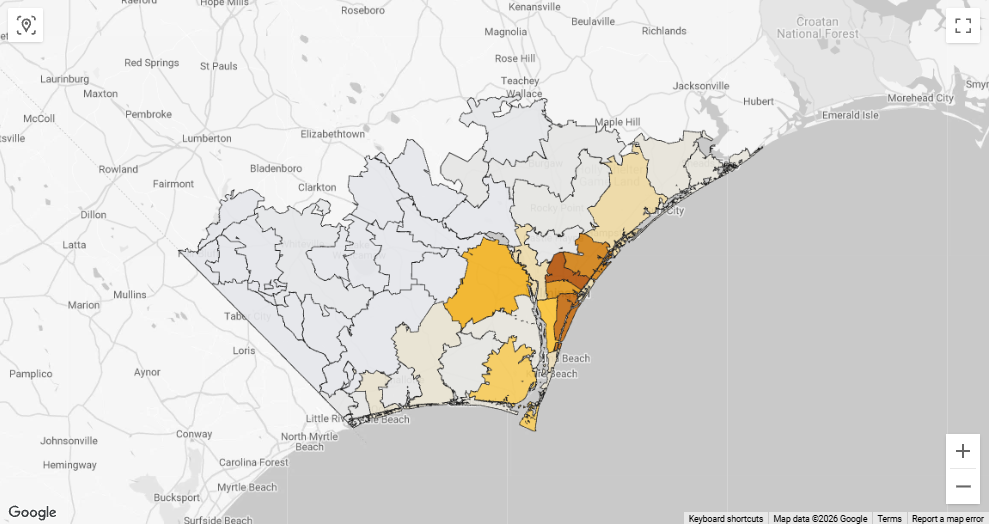
The presentation also reports increased success in formerly developing markets since the 2025 ownership transition. That observation supports considering emerging opportunities alongside the historical footprint; it does not establish the size or cause of the change.
Working with Scorpion, I helped translate the geographic analysis into three market tiers. The framework differentiated investment priorities by market maturity and growth opportunity.
Established territories with a meaningful customer presence.
Maintain acquisition visibility, preserve advertising efficiency, and continue capturing qualified demand.
High-value territories with near-term expansion opportunities.
Prioritize customer fit and growth potential when evaluating additional acquisition investment.
Territories with lower penetration where awareness and presence can expand.
Develop customer interest, evaluate emerging demand, and support longer-term acquisition opportunities.
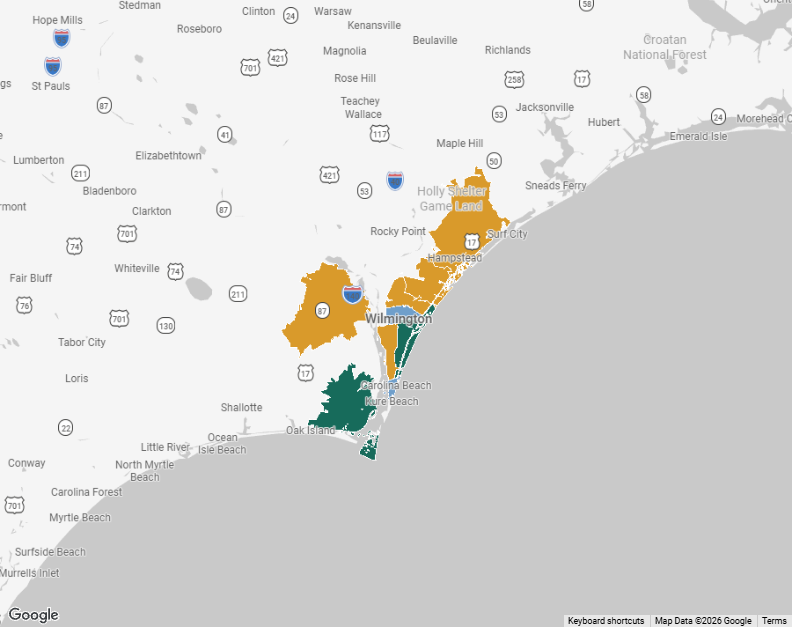
The source defines all three tiers, but Developing polygons are not clearly distinguishable in the supplied raster map. A complete ZIP-to-tier table is not supplied; uncolored areas should not be interpreted as Developing.
Together, these considerations support different priorities across the territory. The framework is a strategic classification, not a published weighted scoring model.
I used customer concentration and market maturity to frame where additional acquisition investment deserved consideration. In collaboration with Scorpion, the tiers supported more intentional geographic targeting and digital advertising allocation.
For Core Markets, the emphasis was continued visibility and efficient capture of qualified demand. Priority Growth Markets emphasized attractive near-term expansion. Developing Markets called for awareness building and evaluation of emerging demand.
This approach connected historical customer information with demographics, marketing performance, and operational considerations. My contribution centered on analytical interpretation and strategic priorities; digital execution was coordinated with Scorpion.
Historical customer concentration shows where a business has succeeded, but strategic market segmentation helps evaluate where future acquisition investment may be most productive.
The framework supports differentiated priorities: continue capturing demand in established markets, assess near-term expansion in priority areas, and develop longer-term opportunities in emerging territories. Its value is a clearer basis for marketing decisions and subsequent performance review.
Evidence: OLP Wilmington × Corporate Brand Marketing, slides 4 and 6 only. Maps are sanitized excerpts of the original embedded images. Customer records, raw ZIP-level counts, and source-deck downloads are not published.